 Book an appointment
Treatments
Laser refractive surgery
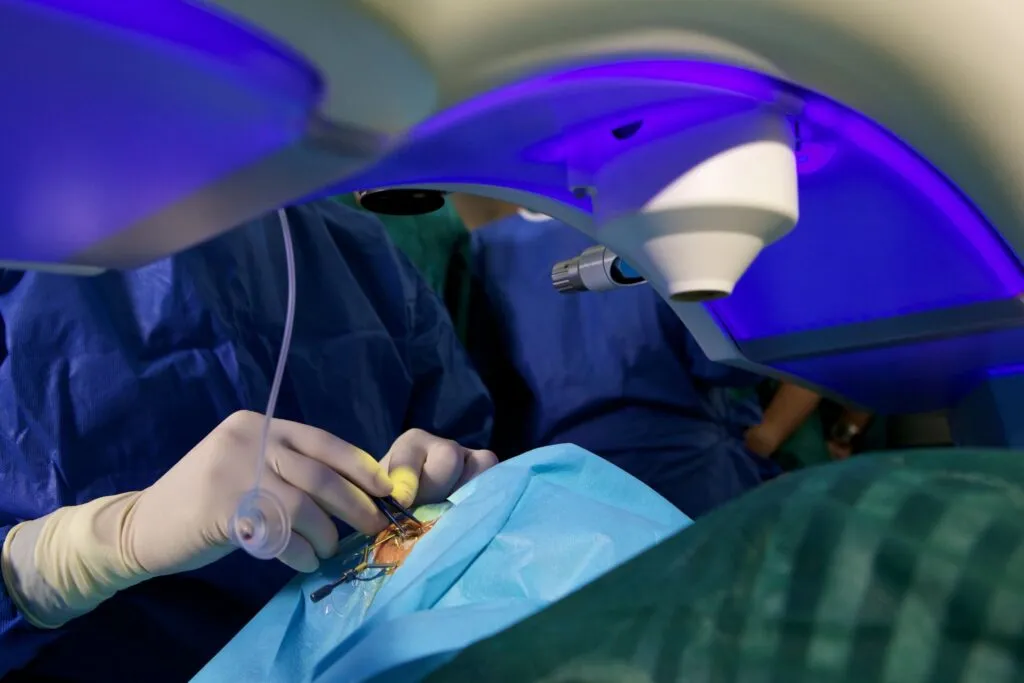
What is laser refractive surgery?
Within the array of treatment possibilities offered by refractive surgery, there are several techniques that are based on the use of high-precision lasers to “shape” the cornea (transparent layer that covers the front of the eye). The aim is to modify its curvature so that the light rays that fall on it can focus correctly on the retina, thus achieving clear vision.
At the Miranza clinics, we boast pioneering ophthalmologists who are experts in the use of these techniques, on which we will provide you with personalised advice, the main ones being:
- LASIK: It is the most widely used technique in the world and has proven its effectiveness for over 25 years. It consists of opening a small flap in the cornea using a surgical blade (microkeratome) and subsequently apply the excimer laser and shape the cornea. An evolution of this technique is the Femtolasik or Intralasik, with the variation that the first phase is not performed with a microkeratome but with the femtosecond laser, which provides even greater accuracy, speed and safety to the surgery.
- SMILE: This is one of the most recent and sophisticated laser refractive surgery techniques, characterised by being minimally invasive. Instead of lifting the surface of the cornea, with the femtosecond laser we carve an internal corneal sheet, which we extract through a microincision of just 2 mm.
- PRK: This is a procedure that acts on a superficial level, so it does not require access to the interior of the cornea. To do so, we remove its outermost layer (epithelium), which is then regenerated, and we shape the central part of the corneal tissue using the excimer laser.
Vision problems treated by laser refractive surgery
If you want to reduce your dependence on glasses or contact lenses, you may consider refractive surgery. The choice of one technique or another will depend not only on the type of refractive error you have and your number of dioptres, but also on other aspects, such as your age, prescription stability, corneal thickness, eye health, etc. Moreover, our specialists will take into account your specific visual needs, according to your work, hobbies and daily activities, to indicate the most suitable procedure for your case.
An expert and individualised surgical indication, based on a complete preliminary study, is essential to achieve maximum satisfaction with the procedure. If you are not a good candidate for laser refractive surgery, an alternative we can also offer you is the implantation of intraocular lenses.





Recovery
Laser refractive surgery has the advantage of being a very quick operation (around 10 minutes), which we perform under topical anaesthesia (drops) and will allow you to go home without the need for being admitted.
Depending on the technique used, it may take you more or less days to see completely clear. For example, in the case of LASIK, you will regain practically normal vision after 24 hours, whereas with PRK it will take about a week. The postoperative discomfort that you may notice will also disappear after 1-2 days in the first case, as well as between 3 and 5 in the second. Whatever the technique used, you will soon be able to go back to work, reading, using the computer and even doing sports. We will tell you in detail the treatment and postoperative precautions you must follow (for example, it is important to moisturise your eyes with artificial tears and avoid putting on make-up during the first few weeks) and evaluate your progress during the control visits.
Risks
Frequently Asked Questions
Refractive surgery covers various procedures designed to correct refractive errors such as myopia, hyperopia and astigmatism, with the aim of reducing dependence on glasses or contact lenses. It can be performed using laser techniques or by implanting intraocular lenses, depending on the patient’s characteristics.
Refractive surgery can be used to correct myopia, hyperopia and astigmatism and, in certain cases, presbyopia. The most appropriate technique depends on factors such as the prescription, age, the thickness and shape of the cornea and the general condition of the eyes.
Laser refractive surgery reshapes the cornea in a controlled way to correct the refractive error. There are different techniques, such as LASIK, PRK or femtosecond laser procedures, and the choice depends on the characteristics of each eye.
Before refractive surgery, a complete eye assessment is carried out to determine whether the patient is a candidate for the procedure and which technique is most appropriate. The assessment may include prescription tests, corneal topography or tomography, pachymetry and an evaluation of the ocular surface, as well as a general eye examination.
To find out whether a person can have myopia surgery, an individual eye assessment is needed. Factors such as age, stability of the prescription, the condition and characteristics of the cornea, eye health and the type of refractive error are assessed.
Recovery time depends on the technique used and each patient’s characteristics. Some techniques allow good vision to be recovered quickly, while others require a longer stabilization period. The ophthalmologist will explain the expected progress and the care instructions after the procedure.
Like any surgical procedure, refractive surgery can have side effects or complications. These may include dry eye, night vision disturbances, inflammation, infection or under- or over-correction. The pre-operative assessment and follow-up help minimize and control these risks.
Refractive surgery includes various techniques to correct refractive errors. These include laser corneal procedures, such as LASIK or PRK, and techniques based on intraocular lenses, such as phakic lenses or lens replacement. The choice depends on each patient’s characteristics.
Refractive surgery aims to correct refractive errors such as myopia, hyperopia and astigmatism and, in certain cases, presbyopia. Its purpose is to improve the quality of vision and reduce dependence on glasses or contact lenses.
Refractive surgery can significantly reduce dependence on glasses or contact lenses, although it cannot guarantee that they will never be needed again. The result depends on the technique used, the characteristics of the eye, the prescription and each patient’s visual progress.
The aim of refractive surgery is to achieve stable, long-lasting vision correction. However, the eye can change over time and new correction needs may arise. For this reason, ophthalmological follow-up remains important after the procedure.
Not all prescriptions can be corrected using the same techniques. Whether refractive surgery can be performed depends on factors such as the magnitude and stability of the prescription, the shape and thickness of the cornea, age and the general condition of the eye.
There is no universal minimum prescription for myopia surgery. The decision depends on the patient’s visual needs and on the balance between the expected benefits and possible risks being appropriate. An eye assessment is needed to determine whether the procedure is indicated.
Yes. In certain patients, it is possible to correct myopia and astigmatism simultaneously with refractive surgery. The technique used will depend on the prescription, the cornea and the other characteristics of the eye.
In certain patients, a single procedure can correct more than one refractive error, such as myopia and astigmatism or hyperopia and astigmatism. Whether this is possible depends on the technique and the anatomical and visual characteristics of each eye.
LASIK is a refractive surgery technique that uses a laser to reshape the cornea and correct the refractive error. A thin opening is first created in the cornea, allowing the laser to be applied to the corneal tissue, and the surface layer is then repositioned.
PRK is a refractive surgery technique in which the laser reshapes the cornea after the outermost layer has been removed. Unlike LASIK, no corneal flap is created. Visual recovery is usually more gradual and depends on each patient’s progress.
LASIK and PRK are laser refractive surgery techniques that reshape the cornea to correct the prescription, but they differ in how the corneal tissue is accessed. In LASIK a corneal flap is created, while in PRK the surface layer of the cornea is removed. The choice depends on the characteristics of the eye and the specialist’s assessment.
A femtosecond laser is a technology that uses ultra-short pulses of light to make very precise cuts in certain eye procedures. In refractive surgery it can be used to create the corneal flap in some techniques, such as LASIK, with a high degree of precision.
Yes, certain cases of hyperopia can be corrected with laser refractive surgery. Whether it can be performed depends on the prescription, age, corneal anatomy and eye health.
Yes. Astigmatism can be corrected using various laser refractive surgery techniques when the characteristics of the eye allow it. The treatment modifies the curvature of the cornea in a controlled way to achieve better correction of the prescription.
Refractive surgery is usually considered once the eye has finished developing and the prescription remains stable. In addition to age, the ophthalmologist must assess the stability of the prescription, the cornea and the general condition of the eyes before determining whether the patient is a candidate.
There is no universal maximum age for all refractive surgery techniques. Age, the condition of the lens, the cornea, the retina and the prescription are factors that must be analyzed to determine which options are safe and appropriate for each patient.
Before refractive surgery, it is important to check that the prescription has remained stable for a certain period. The stability required can vary depending on age, the refractive error and the technique being considered, so the specialist will assess how the prescription has changed before operating.
In certain cases, refractive surgery can be considered even with low prescriptions, especially if dependence on glasses or contact lenses is a limitation. However, the procedure must provide sufficient benefit compared with its possible risks, so the decision is individualized.
Dry eye should be assessed and, if necessary, treated before refractive surgery. Some techniques can temporarily increase dry eye symptoms, so it is important to assess the ocular surface beforehand and optimize it before the procedure.
Yes, astigmatism can coexist with myopia and both errors can be corrected in certain patients with refractive surgery. The technique will depend on the prescription and the characteristics of the cornea and the rest of the eye.
Wearing contact lenses does not necessarily prevent refractive surgery. However, before the pre-operative assessment you will usually need to stop wearing them for a certain period so that the cornea returns to its natural shape and the measurements are more accurate.
The pre-operative assessment makes it possible to analyze the prescription, the shape and thickness of the cornea, the ocular surface and the general condition of the eye. Depending on the case, tests such as corneal topography or tomography, pachymetry and retinal examination may be performed. The aim is to determine the most appropriate technique and rule out factors that could increase the risk of complications.
Corneal topography is a test that analyzes the shape and curvature of the cornea and makes it possible to detect irregularities that may be relevant before refractive surgery. It is one of the tests used to assess safety and determine which technique may be most appropriate.
Corneal pachymetry is a test that measures the thickness of the cornea. This information is especially important before certain laser refractive surgeries, as it makes it possible to assess whether there is enough corneal tissue to perform the procedure safely.
Refractive surgery is performed under topical anesthesia, so the patient should not feel pain during the procedure. Depending on the technique, discomfort, stinging, watering, sensitivity to light or a foreign body sensation may occur afterwards for a variable period.
Laser refractive surgery is a short procedure. The exact time depends on the technique and each patient’s characteristics. In addition to the time the laser is applied, the preparation beforehand and the checks after the procedure must also be taken into account.
Yes. In laser refractive surgery, the patient remains awake during the procedure and receives topical anesthesia to prevent pain. The ophthalmology team gives instructions during the procedure to make it easier to carry out.
With certain laser refractive surgery techniques, it is possible to treat both eyes in the same session. The decision depends on the technique, the patient’s characteristics and the judgment of the ophthalmology team.
During laser refractive surgery, the eye is prepared and the laser is applied in a controlled way to modify the curvature of the cornea and correct the prescription. The procedure is performed under topical anesthesia and, afterwards, the patient receives the necessary instructions for the recovery period.
Visual recovery depends on the technique used. After some laser techniques, visual improvement can be rapid, while others require more time for the cornea to stabilize. Recovery time can also vary between patients.
The time off work depends on the technique used and the type of work. Some people can return to work within a few days, while certain activities involving dust, physical effort or a risk of eye injury may require more time and precautions.
Returning to driving depends on visual recovery and the technique used. You should not drive until the ophthalmologist confirms that your vision is sufficient to do so safely and that the relevant legal requirements are met.
Returning to sport should be gradual and follow the ophthalmologist’s instructions. The precautionary period depends on the technique and the type of activity, and it is especially important to avoid knocks or direct contact with the eyes during the initial recovery.
Returning to work depends on the technique used and the type of work. Office work can usually be resumed sooner than activities involving physical effort, dust, irritants or a risk of knocks to the eyes.
Phone use can be resumed gradually following the ophthalmologist’s instructions. During the first few days there may be sensitivity to light, dryness or fluctuating vision, so it is advisable to limit screen time if it causes discomfort.
There may be some blurred or fluctuating vision during the first few hours or days after refractive surgery, depending on the technique used. Vision usually stabilizes gradually. If your vision gets significantly worse or you experience severe pain, you need to contact your ophthalmologist.
Dry eye is a relatively common side effect after certain refractive surgery techniques. It can show up as a gritty sensation, stinging, watering or fluctuating vision and usually improves during the recovery process. The ophthalmologist may recommend artificial tears or other measures depending on the case.
Stabilization of the prescription depends on the technique used and the individual response of the eye. Although vision may be good shortly after some procedures, the prescription may fluctuate slightly during the recovery period before stabilizing.
The aim of myopia surgery is to reduce or eliminate dependence on glasses or contact lenses and achieve adequate functional vision without optical correction. The result depends on the previous prescription, the technique used and the individual characteristics of each eye.
In some patients, refractive changes can occur after myopia surgery. The result may remain stable for years, but the prescription may change over time for various reasons. If a new prescription appears, the ophthalmologist will assess its cause and the options available.
Although the aim is to reduce dependence on glasses, some people may need them in certain situations after the procedure. This may be due to a residual prescription, later changes in the eye, specific visual needs or the onset of age-related presbyopia.
Refractive surgery can provide stable, long-lasting vision correction, but it does not prevent the eye from changing over time. Some people may develop a residual prescription or new refractive changes, so it is important to keep having eye examinations.
After refractive surgery, side effects such as dry eye, sensitivity to light, halos, glare or fluctuating vision can occur. Most may be temporary, although their course depends on the technique and the patient’s individual characteristics.
Serious complications that can seriously compromise vision are uncommon, but any eye surgery carries risks. A proper pre-operative assessment makes it possible to identify risk factors and determine whether the procedure is appropriate for each patient.
In some cases, a residual prescription may remain after surgery. Depending on its magnitude, stability and the characteristics of the eye, the ophthalmologist may consider various options, such as waiting for the prescription to stabilize, using glasses or considering a surgical enhancement if indicated.
LASIK can cause side effects such as dry eye, halos, glare, fluctuating vision or under- or over-correction. Serious complications are uncommon, but the pre-operative assessment is essential to identify whether the technique is suitable for each patient.
Refractive surgery can be an option for people who want to reduce their dependence on glasses or contact lenses. To determine whether it is worthwhile in each case, the expected benefits, possible risks, the characteristics of the eye and the patient’s visual needs must be assessed.
All three options can provide good vision correction. Glasses and contact lenses are non-surgical solutions, while refractive surgery aims to reduce dependence on these corrections. The choice depends on each person’s preferences, visual needs, prescription and eye characteristics.
Refractive surgery is a widely used technique but, like any surgical procedure, it is not risk-free. Safety depends largely on proper patient selection, a complete pre-operative assessment, choosing the right technique and follow-up afterwards.
From the age of 40, the onset of presbyopia must also be taken into account. In certain patients refractive surgery can be performed, but the approach must consider distance, intermediate and near vision needs and the condition of the lens.
In some patients over 50, surgery to correct the prescription can be considered, but the technique may differ from that used in younger people. It is especially important to assess the lens, the retina and other eye structures before deciding on the procedure.
In people over 60, the approach to correcting the prescription should be studied on an individual basis. At this age it is especially important to assess for cataracts, the condition of the lens and other eye diseases before considering refractive surgery.
If there is a cataract, laser refractive surgery on the cornea may not be the most suitable option. In certain cases, lens surgery with the implantation of an intraocular lens can be considered, which treats the cataract and corrects the prescription.
Having glaucoma does not necessarily mean that surgery to correct the prescription cannot be performed, but it requires a specific ophthalmological assessment. The specialist must examine the condition of the optic nerve, intraocular pressure and other structures before determining which options are safe.
Refractive surgery corrects the prescription that exists at the time of the procedure, but it does not stop the natural aging process of the lens. This is why a person who has had myopia surgery may develop presbyopia over the years and need a specific solution for near vision.
In some patients, a new procedure may be considered if there is a residual prescription or a new prescription appears. Before an enhancement, it is necessary to check that the prescription is stable and that the cornea and the rest of the eye meet the requirements for a new procedure.
When a high prescription or the characteristics of the cornea do not allow laser surgery, there may be other alternatives. In selected patients, phakic intraocular lenses or other solutions may be considered, always after a complete eye assessment.
After refractive surgery, it is important to seek urgent care if you experience a sudden loss of vision, severe pain, a significant increase in redness, abundant discharge, a sudden visual disturbance or any symptom that worsens rapidly. These signs require an ophthalmological assessment to rule out a complication.
Discomfort after refractive surgery depends on the technique used. Some procedures can cause stinging, watering or a foreign body sensation during the first few days. Severe or worsening pain should be assessed by an ophthalmologist to rule out a complication.
Vision may be blurred or fluctuate during the initial recovery period, depending on the technique. However, a significant or sudden loss of vision, especially if accompanied by pain, intense redness or discharge, requires immediate ophthalmic care.
The sudden appearance of numerous floaters, especially if accompanied by flashes of light or a shadow in the visual field, requires an urgent ophthalmological assessment to rule out a problem with the vitreous or retina. These symptoms should not automatically be attributed to the post-operative period after refractive surgery.