 Book an appointment
Treatments
Blepharoplasty
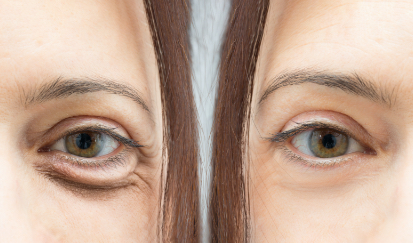
What is blepharoplasty?
Blepharoplasty is one of the facial cosmetic surgeries most demanded by patients, both women and men, and is indicated to remove excess skin or fat on the upper and/or lower eyelids.
- Upper blepharoplasty: we perform it through a minimal incision that leaves no visible scar, as it is hidden in the eyelid fold.
- Lower blepharoplasty: we can perform it internally, accessing the eyelid through the conjunctiva, or externally, through a small incision under the eyelashes.
This surgery allows us to rejuvenate your look and, in order to maximise its effects, we can associate it with other cosmetic surgery techniques, such as eyebrow surgery, or non-surgical treatments, such as peelings.
Consult the specialists in eye and facial aesthetics at the Miranza centres to receive customised advice and, based on a comprehensive assessment of your face, find the most suitable solutions for you.
Techniques
Problems treated by blepharoplasty
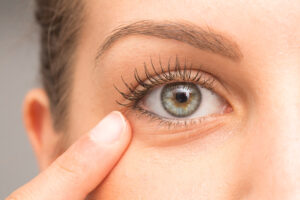
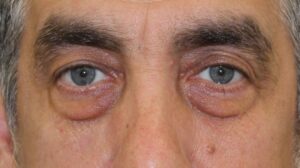
We can also perform this technique to improve periocular sagging, the look of tired eyes or dark circles.
When we perform blepharoplasty to treat certain types of eyelid ptosis, the purpose of the surgery is not merely aesthetic, as correcting a drooping eyelid improves the visual field.

Recovery
On the same day of the surgery, you can recover at home, as it is an outpatient surgery that does not require general anaesthesia.
In the operating rooms of Miranza’s clinics, we have the necessary technology to perform laser-assisted blepharoplasties, which leave less bruising, reduce inflammation and speed up the postoperative period. However, it is normal for you to initially notice the eye is a little swollen and purple, as well as difficulty in closing the eyelid, tearing and blurred vision. Therefore, we recommend that you apply local cold for the first few days and comply with the treatment prescribed by your ophthalmologist. Although you will be able to lead a normal life (read, watch television, be in front of the computer screen, go for a walk …), you should do without practicing certain sports, eye makeup as well as the beach or pool for the first month. During this period, you should also ensure that the eyelid area is well hydrated and protected from the sun to promote healing.
You will immediately notice the cosmetic result of the surgery, without any marks on your skin, and you will fully appreciate the functional result after two weeks.
Risks
Frequently Asked Questions
Blepharoplasty is a surgical procedure that corrects excess skin and, when indicated, fat pads in the eyelids. It can be performed on the upper eyelids, the lower eyelids or both, and its purpose can be functional, cosmetic or both.
Upper blepharoplasty mainly treats excess skin and tissue of the upper eyelid, while lower blepharoplasty targets the lower eyelid area and can treat what are known as eye bags. In some cases both techniques can be combined.
Blepharoplasty may be indicated for people who have excess skin or bags on the eyelids and wish to improve a functional problem, a cosmetic concern or both. Before the procedure, an individual assessment is needed to determine whether it is appropriate.
In certain patients, removing excess skin from the upper eyelid can widen the visual field when it is limited by drooping tissue. The functional indication must be determined through an ophthalmological assessment.
Lower blepharoplasty can be used to treat eye bags when they are due to protrusion of orbital fat or other tissue changes. The technique is adapted to each patient’s characteristics.
The aim of blepharoplasty is to improve excess skin and other eyelid tissue while respecting the anatomy and function of the eye. The result depends on individual characteristics and the technique used.
The duration depends on whether the upper eyelids, lower eyelids or both are operated on, as well as the characteristics of each case. The specialist can give an estimated time after the pre-operative assessment.
After blepharoplasty, swelling and bruising may appear around the eyes, which gradually decrease. Recovery time varies depending on the person and the type of procedure, and the specialist will provide the necessary instructions during the post-operative period.
The appearance of the eyelids changes during the first few weeks due to the swelling that is part of the recovery process. The result continues to evolve until the tissues settle, so the time needed to assess the final result can vary.
Blepharoplasty involves surgical incisions and can therefore leave scars. On the eyelids, incisions are usually planned to follow natural creases or less visible areas, although how the scars develop depends on each person.
Yes. In certain patients it may be indicated to operate on both the upper and lower eyelids, although it is not always necessary to treat all four. The decision depends on each person’s anatomy, needs and goals.
Anesthesia is used during the procedure to prevent pain. Afterwards, discomfort, tightness, swelling, bruising or tenderness in the area may occur, with intensity and duration varying between patients.
There is no single age for blepharoplasty. Whether it is indicated depends on anatomy, the presence of excess skin or bags, the functional impact and the patient’s goals.
It can have a cosmetic purpose, a functional purpose or both. When excess skin or drooping eyelids affect the visual field, the procedure can also be considered from a functional point of view.