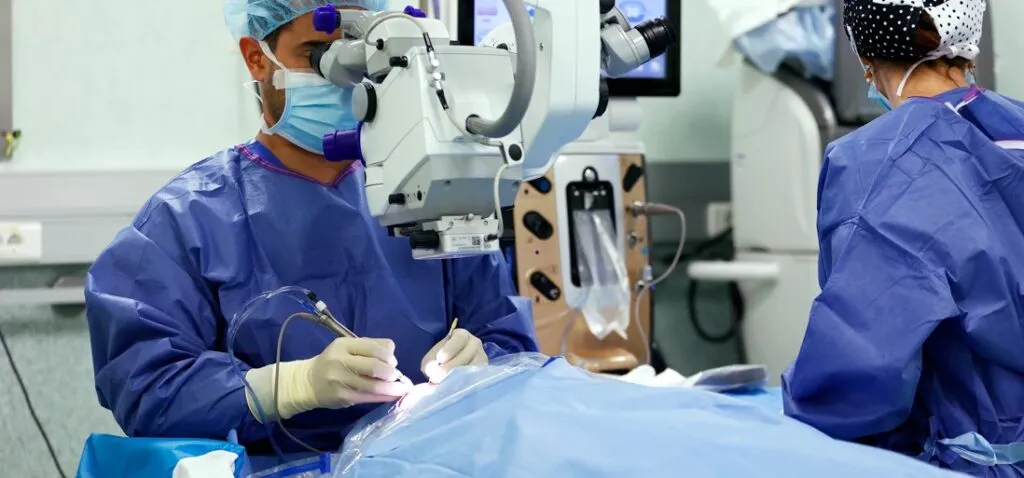
We reinforce the value of strabismus surgery as a functional treatment
Can strabismus surgery improve visual function in addition to correcting eye alignment? We have published a new clinical study, Comparison of the Surgical Treatment for Strabismus According to Its Type: Esotropia Versus Exotropia, which strengthens the scientific evidence supporting horizontal strabismus surgery.
The research demonstrates that the procedure is equally effective for both esotropia (where one or both eyes turn slightly inward) and exotropia (where one or both eyes turn outward), the two most common types of ocular misalignment.
This new study builds on previous research published under the title Comparative Analysis of Strabismus Measurement Using a Video Oculography System and Alternate Prism Cover Test, which established methodological foundations for assessing ocular alignment using video-oculography (VOG) technology. This system enables ophthalmologists to accurately analyze the eye deviations caused by strabismus.
The new study was conducted at Vissum Grupo Miranza and included 49 patients aged between 4 and 87 years who underwent horizontal strabismus surgery. The results showed a significant reduction in ocular deviation across all gaze positions.
Significant functional benefits
Beyond improving eye alignment, the study highlights important functional benefits. Following surgery, the percentage of patients able to fuse the images received by each eye into a single image increased from 27% before surgery to 73% after the procedure.
In addition, an improvement in stereopsis (the ability to perceive depth or distance using both eyes simultaneously) was observed. These findings underscore that strabismus surgery not only enhances the aesthetic appearance of the eyes but also contributes to restoring visual function, thereby improving patients’ quality of life.
Impact of the VOG system
The study also emphasizes the importance of the new VOG system. This advanced technology, based on infrared cameras, allows ocular alignment to be evaluated in different gaze positions.
The results show that some deviations may persist, particularly during combined vertical and horizontal eye movements. This finding may help explain why some patients continue to experience functional limitations even when eye alignment appears to be correct.
One of the most relevant findings of the study is that the direction of ocular deviation does not influence short- or medium-term surgical outcomes. This conclusion confirms that horizontal strabismus surgery offers comparable effectiveness for both types of deviation.
Article reviewed by the Vissum Grupo Miranza team.