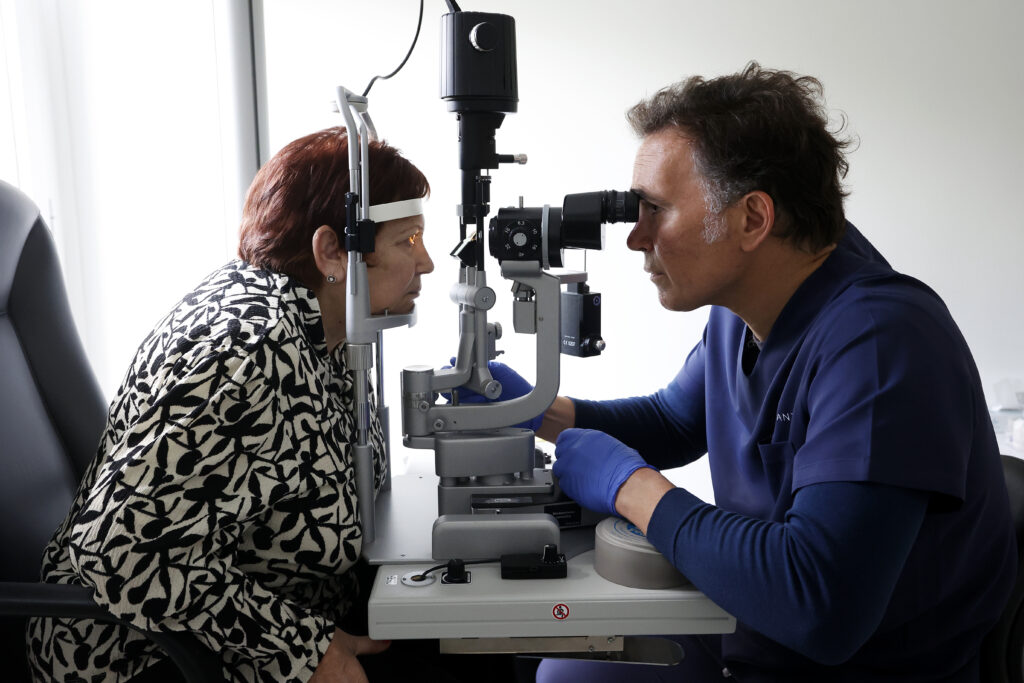
We are committed to “visual longevity”, helping protect against eye diseases associated with aging
The risk of developing eye diseases such as cataracts, glaucoma, and age-related macular degeneration (AMD) increases with age. Together, these conditions are among the leading causes of visual impairment in adults.
Life expectancy in Spain has already surpassed 84 years on average, meaning that we are living longer than ever. However, the great challenge today is not only to live more years, but to do so with the highest possible quality of life. This means maintaining good vision in order to preserve independence and well-being in all daily activities.
Reading, driving, walking safely, or maintaining an active social life all depend on healthy eyes. However, just like the rest of the body, the visual system also ages. In fact, according to the Visual Health Foundation (FUNSAVI), 8 out of 10 people over the age of 60 experience visual and/or eye-related problems.
Miranza specialists warn that many people assume vision loss is an inevitable consequence of getting older, when the reality is quite different. Although eye aging can contribute to the development of certain conditions, modern ophthalmology now has tools capable of preventing, diagnosing, and treating many of them before they irreversibly affect vision
The eye also ages
From the age of 40 onwards, physiological changes begin to occur in the eye. The progressive loss of elasticity of the lens leads to presbyopia, or age-related farsightedness, which is often the first sign of ocular aging. However, as the years go by, the risk of developing conditions such as cataracts, glaucoma, and age-related macular degeneration (AMD) also increases. These are among the leading causes of visual impairment in the adult population.
The good news is that the outlook for these conditions has changed in recent years thanks to advances in diagnostic and therapeutic approaches.
In the case of presbyopia, which affects virtually the entire population over the age of 45, several treatment options are available, including surgical techniques that can reduce or eliminate the need for glasses. Among these, lens replacement surgery with intraocular lenses stands out as a definitive solution to correct the loss of focusing ability and, at the same time, address other associated refractive errors such as myopia, hyperopia, or astigmatism.
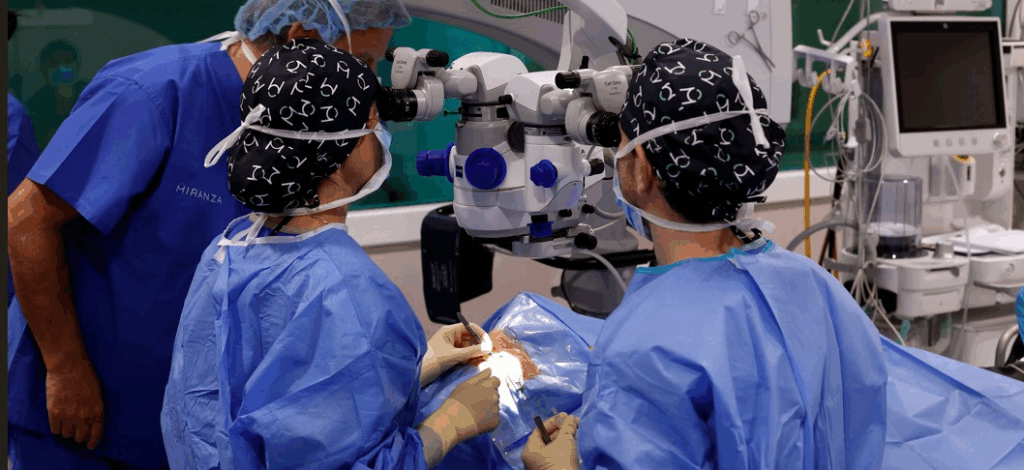
In the case of presbyopia, which affects almost the entire population from the age of 45 onwards, there are surgical options available to eliminate the need for glasses, such as lens surgery.
Cataract surgery, a natural consequence of the aging process of the lens, remains one of the most frequently performed procedures in ophthalmology. Increasingly precise and minimally invasive, this intervention not only restores the transparency of the lens but also offers the possibility of improving visual quality through the use of next-generation intraocular lenses tailored to each patient’s needs.
Glaucoma, meanwhile, affects around 5% of people over the age of 65 and 10% of those over 80. It continues to be one of the major challenges in eye health due to its silent progression, as it can advance for years without noticeable symptoms until it causes irreversible damage to the optic nerve. For this reason, specialists emphasize the importance of regular eye examinations, especially from the age of 40–50 onwards, particularly for people with a family history of the disease. In addition to traditional pharmacological treatments, techniques such as Selective Laser Trabeculoplasty (SLT) provide effective, less invasive alternatives for controlling intraocular pressure.
Another of the most serious conditions is age-related macular degeneration (AMD). It affects the macula, the area of the retina responsible for central vision, and causes progressive vision loss that can make it difficult to read, recognize faces, or drive, with a significant impact on patients’ quality of life. In Spain, it affects more than 700,000 people and is the leading cause of blindness among people over 55 in developed countries. There are two forms of AMD: dry AMD, which is more common and progresses slowly, and wet AMD, which is less frequent but responsible for most cases of severe vision loss.
Intraocular injections are currently the main treatment option for wet AMD, as they allow medications to be delivered directly into the eye to preserve or improve vision. Newer therapies are becoming increasingly effective and longer-lasting, reducing the need for frequent treatments. For dry AMD, however, there is still no equivalent treatment available, although numerous studies are underway to develop new therapies.