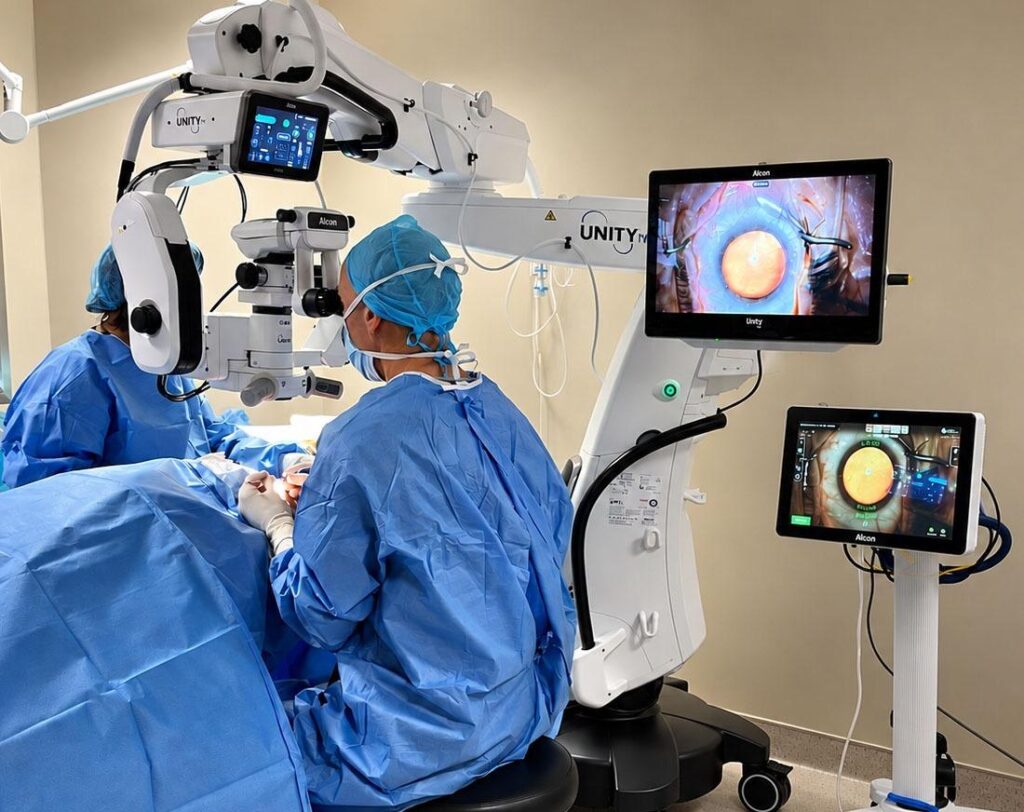
We are introducing a new surgical technology that connects diagnosis, planning, and eye surgery
A new surgical microscope helps surgeons make decisions at every step, providing stable, consistent imaging throughout the entire procedure.
We are at the forefront of innovation in ophthalmic surgery, becoming the first centre in Vitoria to incorporate a state-of-the-art microscope designed to provide surgeons with more stable, precise and personalised visualisation during every procedure. The UNITY M surgical microscope (Alcon) is being used for the first time in the operating theatres of Miranza Ókular (Vitoria).
The Vitoria-based centre has already performed its first surgeries using this technology, with the participation of Dr Jaime Aramberri, Medical Director of the centre. Beyond the capabilities of a state-of-the-art surgical microscope, one of the main advantages of UNITY M is its ability to connect information generated at different stages of the surgical process. Thanks to its planning software, data obtained during diagnosis can be used in the operating theatre to support the preparation and performance of the procedure.
This approach paves the way for a model in which data are no longer isolated at each stage, but instead form part of a more continuous and connected process. In advanced cataract and retinal surgery, this integration can help optimise planning, support decision-making and improve the safety of information transfer.
“This is not simply about introducing a new microscope, but about integrating all the information gathered during diagnosis and planning into the surgical process itself. The aim is to bring that information into the operating theatre more directly, in a structured and secure way, helping us make decisions during surgery”, explains Dr Aramberri.
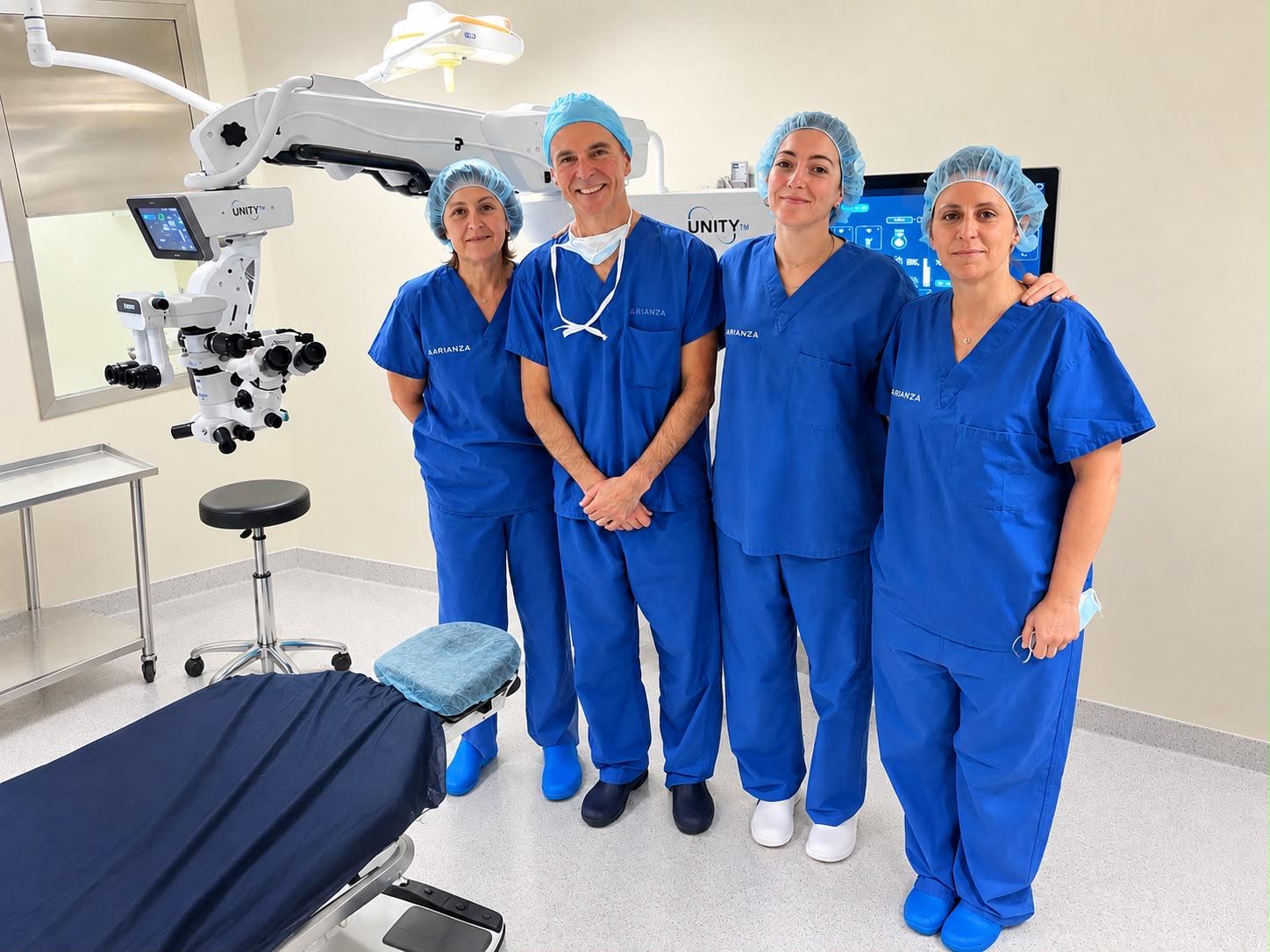
The Vitoria clinic is the first centre in Spain to have this technology, which connects information generated at different stages of the surgical process
A New way of visualising during surgery
UNITY M incorporates an illumination system that allows the coaxial light (which travels directly along the same axis as the camera) and oblique light to be adjusted independently, both in terms of colour temperature and spectrum. This enables surgeons to tailor the lighting to their preferences and the specific requirements of each procedure.
Its optical architecture, based on positioning the lens above the illumination module, is designed to provide a broad, stable red reflex, supporting consistent visualisation throughout surgery.
The system is also designed to deliver stable, consistent images during the procedure, providing surgeons with visualisation that supports decision-making at every stage.
Connecting diagnosis, planning and surgery
The introduction of UNITY M forms part of Miranza’s commitment to integrating the different technologies involved in the surgical process. The aim is to move towards a model in which diagnosis, planning and surgery are increasingly interconnected.
“We are moving away from using different technologies independently and towards making them all part of a single ecosystem. In our view, this is one of the major changes ophthalmic surgery will undergo in the coming years”, says Dr Aramberri.
Article supervised by Dr. Jaime Aramberri, Medical Director of Miranza Ókular