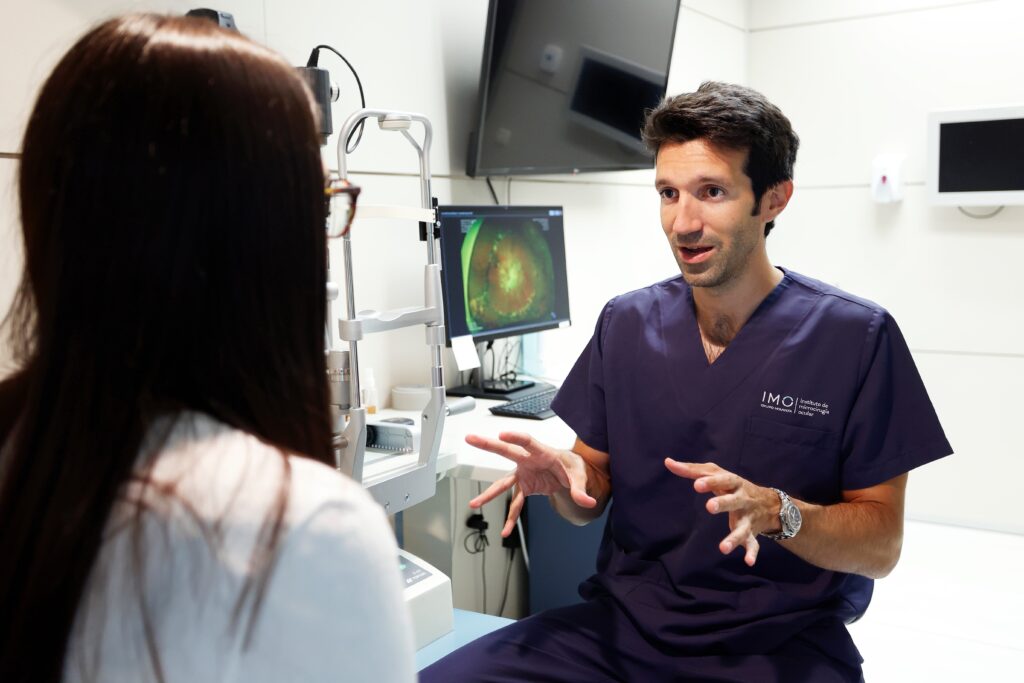
New retinal treatments make it possible to reduce injections and improve visual prognosis
Advances in anti-angiogenic drugs, which prevent the formation of new blood vessels, along with imaging diagnostics and retinal surgery, have represented a major qualitative leap in the treatment of conditions such as age-related macular degeneration and diabetic macular edema.
Retinal diseases are among the leading causes of visual impairment and legal blindness—defined as not necessarily implying a complete absence of vision—in ophthalmology. However, in recent years, significant advances have made it possible to improve disease control and patients’ quality of life. Specialists at IMO Miranza Madrid highlight the evolution of pharmacological treatments, surgical technology, and imaging diagnostics as key factors behind this progress.
Intravitreal injections: a key treatment for retinal diseases
As explained by Dr. Jorge Ruiz Medrano, a retinal specialist at IMO Grupo Miranza Madrid, treatments based on intravitreal injections of anti-angiogenic drugs (anti-VEGF) are among the most common procedures in daily clinical practice. These drugs are therapies that prevent the formation of new blood vessels.
“With this type of treatment, we address some of the main causes of legal blindness, such as age-related macular degeneration (AMD) or diabetic macular edema,” notes Dr. Ruiz Medrano.
In recent months, the introduction of new anti-angiogenic drugs has represented a significant improvement over traditional treatment. “These new medications offer similar or even greater efficacy, but with a longer duration of effect,” the doctor adds. This means that patients may require fewer injections per year, making treatment follow-up easier and helping to maintain stable visual acuity in the long term.
Warning signs in retinal diseases
In ophthalmology, early detection is essential to prevent serious complications. The specialist warns of certain alarm symptoms that may indicate a retinal disorder, such as retinal detachment: the sudden appearance of floaters, the perception of flashes of light, and the sensation of a dark curtain advancing from the sides of the visual field toward the center.
“When a retinal detachment is diagnosed, the most important thing is to begin treatment within the first 24 hours,” emphasizes Ruiz Medrano, adding that “a rapid response can be decisive in preserving vision.”
Advances in surgery and imaging diagnostics
For his part, Dr. José María Ruiz Moreno, a retina and vitreous specialist at IMO Grupo Miranza, highlights that improvements in the treatment of retinal diseases are based on three main pillars. “In recent years, we have made progress thanks to improvements in surgical microscopes and instruments for vitrectomy procedures, advances in imaging diagnostics, and the development of pharmacology with anti-VEGF drugs,” the doctor explains.